
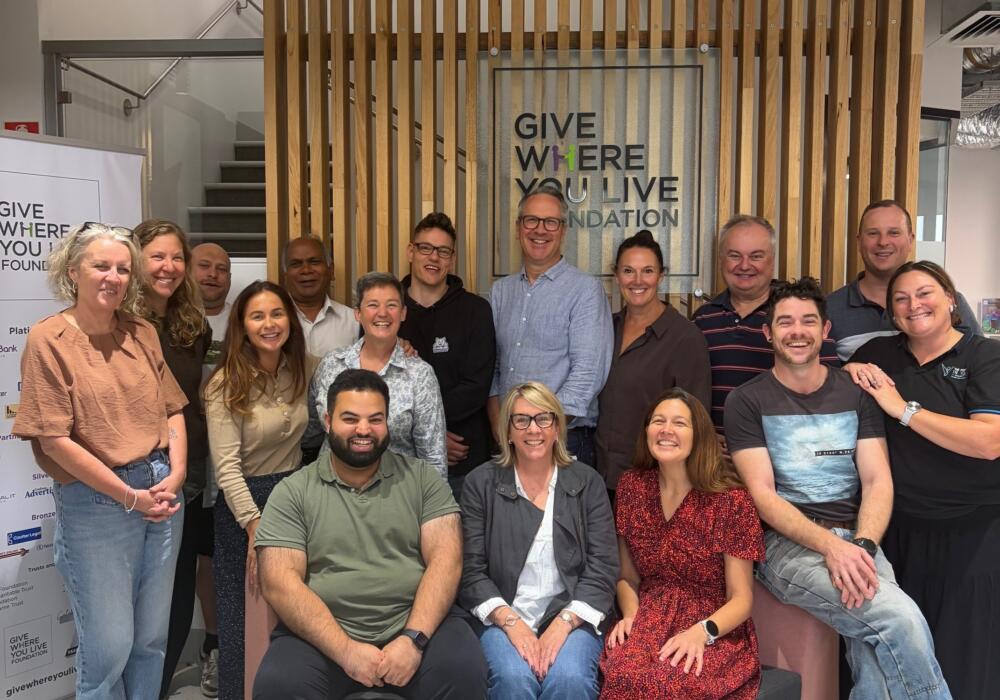
The Give Where You Live Foundation’s Social Innovation Lab is designed to address the most difficult social and economic challenges facing our community. Through the Lab we look to shift the conditions that hold complex challenges in place across our region. By bringing together people with different ideas and perspectives to collaborate, experiment and learn, we aim to uncover new insights, design and test place-based solutions with the potential to create meaningful social and economic change.
In our first Lab, drawing on the findings of our Home Truths research, we brought together people with lived experience, frontline organisations, government and community leaders to explore the root causes of homelessness and identify innovative solutions with the potential to create lasting change.
The Social Innovation Lab is a key part of the Foundation’s commitment to addressing disadvantage through collaboration, evidence and innovation. More than a funding program, the Lab creates space for diverse voices to come together, deepen understanding of complex issues, uncover underlying causes and develop solutions that can drive meaningful systems change.
By investing in new approaches and learning from their outcomes, the Foundation aims to strengthen the region’s ability to prevent homelessness and create pathways to long-term housing stability.
One participant reflected on the experience, saying: “This is an opportunity to learn how innovation can be applied to social issues in a way that genuinely shapes people’s lives.”
As a direct outcome of the Social Innovation Lab, the Give Where You Live Foundation has committed $150,000 through its Innovation Fund to support two projects over the next 12 months.
Meli’s Geelong Project will receive $50,000 to trial an early intervention approach aimed at preventing youth homelessness, while The Power in You Project will receive $100,000 to support people leaving custody to secure stable housing, strengthen community connections and reduce the risk of homelessness and reoffending.
Both initiatives will be independently supported and evaluated, building evidence about what works and identifying approaches that could be expanded to strengthen the region’s response to homelessness.